Copy.ai vs ChatGPT for Marketing Copy
Compare Copy.ai and ChatGPT for marketing copy by workflow automation, prompts, Projects, plan limits, and team fit.

Copy.ai is the better fit when marketing copy is part of a repeatable, multi-step go-to-market process. ChatGPT is the better fit when a writer wants a flexible prompt-and-revision workflow that can be organized in Projects after login. A single draft does not settle a universal quality winner, so choose the system that gives your team the right controls around the copy.
The same criteria apply to both: how work starts and evolves, how context is kept together, whether the process needs reusable automation, plan-dependent access, and the amount of review a campaign requires.
Copy.ai vs ChatGPT at a glance
| Product | Best fit |
|---|---|
| Copy.ai | Teams that need reusable, multi-step marketing workflows in addition to Chat. |
| ChatGPT | Writers who want adaptable prompts, follow-up revision, and Project context for ongoing work. |
Copy.ai for repeatable marketing systems
Copy.ai combines a Chat product with a workflow builder aimed at repeated go-to-market tasks. Its workflow-builder documentation describes a no-code system for chaining text generation, web scraping, and research-agent actions, while allowing teams to adjust prompts, parameters, and logic.
That structure is useful when a team repeatedly turns the same inputs into sales, SEO, or campaign materials. The Copy.ai pricing page lists its self-serve Chat plan at $29 monthly or $24 per month billed yearly, with five seats, unlimited Chat words, unlimited Chat projects, and model access that includes OpenAI, Anthropic, and Gemini.
The material distinction is that Chat access and workflow execution are priced separately. Workflow-credit use depends on the steps and generated content in a run, while bulk workflow runs, API access, and more than 20 technology integrations are listed for Enterprise. Choose Copy.ai when that repeatable system matters more than an open-ended writing process.
ChatGPT for flexible prompts and project context
ChatGPT supports a more adaptable writing process: provide a brief, request a draft, then revise it with follow-up instructions. After login, Projects can group chats, files, and instructions for ongoing work, which can help keep a campaign brief and its revisions together.
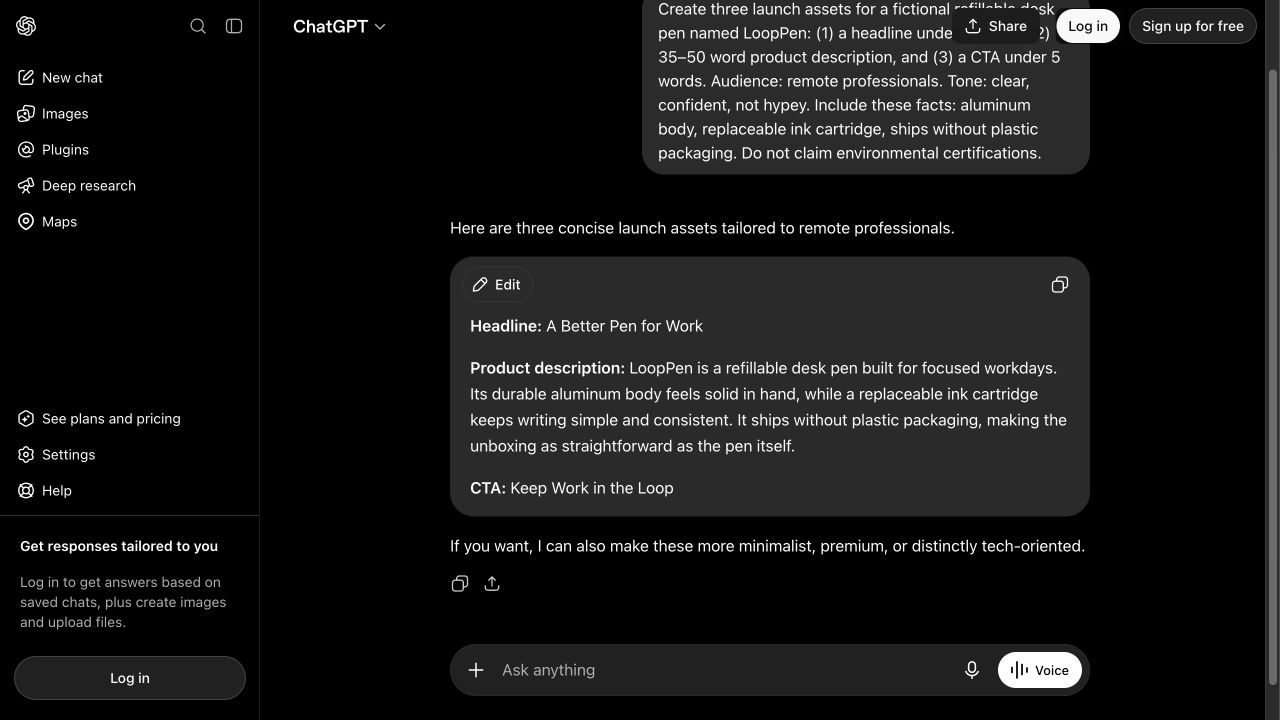
ChatGPT's web interface organizing a marketing draft into headline, description, and call-to-action sections.
This workflow suits writers who want to adjust the process across formats instead of building a fixed sequence first. It also puts more responsibility on the writer to provide clear instructions, retain the right context, and review every factual and brand-sensitive claim. OpenAI's current availability and limits guidance says model access and usage limits depend on the plan and managed-workspace settings, so confirm the account you intend to use.
Which workflow should you choose?
Choose Copy.ai when your team needs a repeatable marketing system that combines generation with structured actions. Confirm the workflow-credit and integration boundaries for the plan you expect to use.
Choose ChatGPT when your team needs a broad, iterative prompt workflow and Projects are enough to hold the brief, files, and revisions together. Check plan-dependent availability before relying on a particular model, file feature, or usage level.
For either choice, use generated copy as a working draft. Marketing claims, product details, legal language, and calls to action still need a human review before they go live.
FAQ
Polish the final short draft
When the campaign structure is correct but the final wording needs a focused pass, use Rephrase AI's AI rephraser and confirm the result preserves the approved claim and call to action.